
Affinity Moving · October 21, 2026
← All articlesWhen people ask about furniture protection by movers, they usually mean two things: how a crew physically shields your sofa, dresser and dining table from the truck, and what happens financially if something still gets damaged. Good movers handle the first with blankets, wrap, pads and floor covering, and the second with a written estimate, a condition inventory and a clear liability option on the contract. This guide covers both, so you know what to expect on move day and what to ask before you sign.
TL;DR
- Professional crews protect furniture in layers: moving blankets first, stretch wrap to hold them in place, then padding, corner guards and straps in the truck.
- Floors, doorframes and banisters get protection too. Ask the mover what they bring for hardwood, and what they expect you to supply.
- Wrapping prevents damage. Liability coverage decides who pays when prevention fails, and the two are separate.
- On interstate moves, the federal default of 60 cents per pound per article is far below replacement value. Ask about Full Value Protection and declare valuable pieces in writing.
- Walk through the inventory condition notes with the crew lead before anything leaves the house.
Table of Contents
- How movers wrap and pad furniture
- Protecting hardwood floors, stairs and doorways
- What you should do before the crew arrives
- The inventory and condition report
- Who pays when furniture is damaged
- Our perspective
- When to hire movers for protection-heavy moves
- How Affinity Moving can help
- FAQ
- Sources
How movers wrap and pad furniture
The method is simple and the discipline is what separates a careful crew from a rushed one. Most professional crews work from the same toolkit that consumer moving guides describe: blankets, plastic stretch wrap, bubble wrap, corner protectors, and straps.
Moving blankets come first
Quilted moving blankets are the main workhorse. They cushion wood, absorb bumps and stop surfaces from rubbing together in the truck. A dresser or table gets one or more blankets wrapped around it, with extra folds over corners and legs.
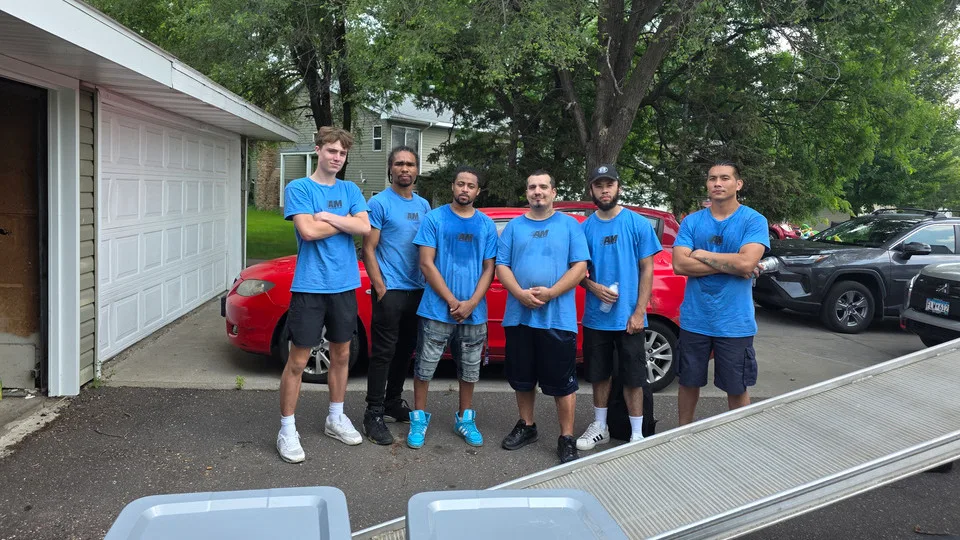
Blankets are reusable and breathable, which matters. Wrapping bare wood directly in plastic can trap moisture against a finish, so plastic belongs over the blanket, not under it.
Stretch wrap holds everything in place
Stretch wrap goes over the blankets to keep them from sliding and to keep drawers and doors closed. On upholstered pieces it can also keep dust and dirt off the fabric, but a clean pad or fabric cover usually sits between the wrap and the cushions. Crews avoid wrapping tightly directly on leather or delicate finishes for long periods, so ask about your specific pieces.
Corners, glass and fragile surfaces
Corner protectors guard the most exposed points of tables and headboards. Glass tabletops, mirrors and framed art are typically wrapped separately and moved upright, never flat under other items. Our guide to packing fragile items and jewelry explains how those smaller valuables should be handled before the crew arrives.
Disassembly reduces risk
The safest way through a narrow staircase or doorway is often to take the piece apart. Bed frames, table legs and modular shelving are removed, hardware is bagged and labeled, and everything is reassembled at the new home. Pulling a rigid frame through a tight turn is how corners get chipped and joints get strained. We cover this under our furniture assembly and disassembly service.
In the truck
Protection continues after loading. Heavy pieces go on the floor of the truck, lighter ones above, and straps or load bars keep everything from shifting. A tightly packed, well-strapped truck matters as much as the blankets, because most in-transit damage comes from movement.
Protecting hardwood floors, stairs and doorways
Furniture is not the only thing at risk. Dollies, dropped boxes and gritty boots scratch hardwood fast. A careful crew covers the path from the door to the truck, not just the furniture.
Common options include:
| Surface | Typical protection | Notes |
|---|---|---|
| Hardwood | Red rosin or builder’s paper, taped only to itself or to a cover | Neighbor’s floor protection guide lists rosin paper as a common choice for hardwood |
| Carpet | Adhesive carpet film | Film should be made for carpet, not for hard floors |
| Tile and vinyl | Thick mats or hardboard runners | Heavy loads on dollies can crack tile |
| Stairs and banisters | Padding on rails and corners | Narrow turns are where most wall and rail damage happens |
| Doorframes | Foam or blanket wraps | Wide furniture often brushes the frame |
One rule applies to every surface: keep grit off it. Lowe’s flooring care guidance recommends doormats and area rugs at entrances to stop dirt and sand being tracked onto the floor. On move day that means sweeping the route before the crew starts and again if the weather is wet or snowy, which in Minneapolis is a real consideration for half the year.
Tape is another trap. Do not let anyone put standard painter’s or packing tape directly on a finished wood floor, because adhesive can leave residue or lift finish. Ask the crew lead what they use.
If you are choosing movers for a Minneapolis apartment, ask how they handle building floors too. Many buildings require protection in hallways and elevators, and some require proof of insurance. Our pages for Uptown and downtown high-rise and loft moves cover what those moves involve.
What you should do before the crew arrives
You can make the crew’s protection work better with a little preparation.
- Clear the pathways. Remove rugs, décor and low obstacles from the route so the crew is not stepping around hazards while carrying furniture.
- Empty drawers of valuables and liquids. Heavy drawers shift weight, and valuables should travel with you.
- Photograph your furniture. Take dated photos of each major piece from several angles, including existing scratches. This gives you a baseline if you later file a claim.
- Point out fragile and high-value items. Tell the crew lead about antiques, glass and anything sentimental before wrapping begins.
- Check the estimate. Confirm that it reflects stairs, elevators, long carries and special items. Our guide to preparing for movers lists what to settle in advance.
Also ask what packing materials are included. In Minnesota, some movers supply boxes and some do not, which we explain in this guide to moving companies and boxes.
The inventory and condition report
Wrapping is only half the protection. The other half is the paper record. On many moves, the crew lists each item and notes its condition with a code, such as one for gouged or scratched. California’s regulator explains this in its guide for people moving household goods, and the practice is similar elsewhere.
Make sure you and the crew agree on those notes before the truck leaves. If a piece is already scratched, it should say so. If it is in perfect shape, you want that recorded too. At delivery, compare each item against the list before you sign anything.
Who pays when furniture is damaged
This is where “furniture protection” often gets misunderstood. Padding and wrap are physical measures. Liability coverage is a contractual answer to a different question: what does the mover owe you if damage happens anyway?
The federal rule for interstate moves
For moves across state lines, federal rules require interstate movers to offer two levels of liability:
- Full Value Protection (FVP): the mover is responsible for the replacement value of lost or damaged items. The cost varies by mover and often involves a valuation charge.
- Released Value Protection: minimal coverage at no additional cost, capped at 60 cents per pound per article.
The gap is easy to underestimate. The Federal Motor Carrier Safety Administration gives an example: a 10-pound item worth $1,000 would be compensated at only $6.00 under released value. A solid wood dresser is heavier, so the payout would be higher, but still likely well below what it costs to replace.
The FMCSA also notes that this is a contractual limit on liability, not an insurance policy. Our explainer on Full Value Protection and 60-cent payouts goes deeper, and how moving insurance works covers the broader picture.
Declare high-value items in writing
Movers may limit liability for articles of extraordinary value, meaning items worth more than $100 per pound, unless you list them on the shipping documents before the move. The FMCSA lists examples such as antiques, jewelry, china, furs and oriental rugs. The burden is on you to identify and declare them. If you own an antique chest or a valuable rug, put it on the paperwork. Our guide for high-value inventory on U.S. moves walks through this.
Local moves within Minnesota
The federal two-option rule applies to interstate moves. A move that starts and ends in Minnesota falls under state rules instead, and the terms of your written agreement matter. Do not assume the interstate numbers apply to a local move. Ask the mover, in writing, what liability applies, what it costs, and how to file a claim. The questions to ask licensed Minnesota movers are a good checklist.
Storage adds another layer. Under Minnesota Statutes chapter 231, a warehouse operator storing household goods must provide insurance for the depositor of at least $1.25 per pound per article against standard perils like fire, unless the depositor declares in writing that the goods are worth no more than 60 cents per pound per article. The depositor pays for that insurance on top of storage fees. If your belongings will sit between homes, this overview of storage in transit is a helpful read on keeping them protected, and our Minneapolis storage cost guide covers budgeting.
If something is damaged
Speak up at delivery, note the damage on the paperwork before signing, and photograph it. Then follow the claim steps in your contract. The FMCSA’s loss and damage advisory is a useful reference for interstate moves. Claims with photos, a baseline inventory and a declared value are far easier to resolve than ones built from memory.
Our perspective
We see furniture protection as a planning problem before it is a materials problem. Blankets and wrap do their job when the crew knows what is in the home, how the building is laid out, where the truck can park and how far each piece has to travel. Most damage we want to prevent starts with a surprise: a stairwell nobody mentioned, a piece that turns out to be an antique, a long carry from the curb.
That is why we build every estimate in writing around size, access, distance and timing, and why we want move details settled well before move day. A crew that has the plan in hand can decide ahead of time which pieces get disassembled, which need extra padding and where floor protection goes. Surprises on the day are what cause rushed handling.
Our advice for anyone hiring movers: ask three things. What protection materials do you bring? What liability applies to my move, in writing? How do I report a problem? Any reputable mover should answer all three without hesitation. If you have a piano, antiques or artwork, tell us early so we can plan specialty handling properly.
— Derrick
When to hire movers for protection-heavy moves
Some moves justify professional handling more than others:
- Heavy or awkward furniture, such as sectionals, armoires and solid wood tables, where a dropped corner means real repair costs.
- Upstairs or elevator moves, where every turn is a chance to scrape a wall or rail.
- Pianos, antiques and artwork, which need specialized techniques and a clear record of declared value.
- Hardwood-heavy homes, where floor protection is as important as furniture protection.
- Senior and assisted-living moves, where timing and care matter. See our senior living moving page.
If you are comparing options, remember that a very low quote can mean less padding, fewer crew members or thin coverage. Compare what is included, not just the number.
How Affinity Moving can help
We are a licensed and insured Minneapolis moving company handling local and long-distance moves for homes, apartments, condos and offices. Our crews are trained to protect belongings, and we offer packing and unpacking, furniture disassembly and reassembly, and specialty relocation. Start with a written estimate: request a free estimate, or see our residential moving services and packing services.
FAQ
Are movers liable for broken furniture?
Yes, to the extent of the liability in your contract. On interstate moves, the FMCSA says movers must offer Full Value Protection or Released Value Protection, and the released option is capped at 60 cents per pound per article. Read the coverage terms on your paperwork before the move, not after.
How do movers cover furniture while moving?
They wrap pieces in moving blankets, secure them with stretch wrap, add corner guards or bubble wrap to fragile areas, and strap everything down in the truck. Disassembly is used where it reduces risk.
How can I protect my hardwood floors during a move?
Cover the path with rosin or builder’s paper, keep grit off with mats and sweeping, and avoid putting tape directly on the finish. Ask your mover what floor protection they supply so you know what to buy yourself.
Does my mover’s business insurance cover my furniture?
Not automatically. The FMCSA explains that valuation is a contractual level of liability, not an insurance policy, and it is separate from the mover’s own business insurance. Ask what your contract says about declared value.
Sources
- FMCSA: Liability & Protection
- FMCSA: Before Requesting Services from Any Mover (Subpart B)
- FMCSA: Consumer Advisory, Loss and Damage Countermeasures
- Minnesota Statutes, Chapter 231
- California PUC: Important Information for People Moving Household Goods
- Angi: How To Protect Floors When Moving
- Neighbor: Moving Floor Protection Tips
- Lowe’s: Cleaning Your Floors