
Affinity Moving · October 27, 2026
? All articlesMoving day follows a predictable arc: a walkthrough when the crew arrives, loading, the drive, unloading, and a final check before you sign. For a typical local move, that arc fits inside one day. Long-distance moves split it, with loading on one day and delivery on a later, agreed date. Below is a realistic schedule, what you should be doing at each stage, and the things that stretch the day.
TL;DR
- Moving day has three phases: prep and walkthrough, loading, then unloading and sign-off. Each one has a task that only you can do.
- Be home when the crew arrives, walk the whole space with the crew lead, and read every document before you sign it.
- Stay until loading finishes, give the driver directions to the new home, and be present at delivery to direct furniture placement.
- Note any damaged or missing items on the inventory before you sign at delivery.
- Stairs, long carries, elevator rules and unfinished packing are the usual reasons a move runs long. Settle them before the day.
Table of Contents
- The three phases of moving day
- The night before: set up the morning
- A sample moving day timeline
- Arrival and walkthrough
- Loading: what the crew does and what you do
- Transit and travel
- Unloading and sign-off
- What makes moving day run long
- Your job and the crew’s job
- Our perspective: the day should be boring
- Plan your move with a written estimate
- FAQ
- Sources
The three phases of moving day
FreightWaves describes three standard phases of moving day: prep and walkthrough, loading, and unloading and sign-off. It also notes that how long the day takes depends on home size, stairs, parking distance, elevator rules and how much is already packed. Local moves often finish the same day, while long-distance moves have a later delivery date.
That is a useful frame, because each phase asks something different of you. During the walkthrough you are a decision-maker. During loading you are a point of contact. At delivery you are an inspector. Knowing which hat you wear when keeps the day calm.
If you are still weeks out, start with our 8, 6, 4, 2, 1 week moving timeline, which covers everything that comes before the day described here.
The night before: set up the morning
Most of what makes moving day smooth happens the evening before. Do these things before bed:
- Finish packing and seal boxes. Anything open or half-full slows the crew down and is more likely to break. If you will not finish, tell your mover ahead of time so the plan and the estimate reflect it. Our packing services cover materials and full packs for exactly this situation.
- Empty and defrost. Drain hoses, empty the fridge and freezer, and disconnect appliances that are going.
- Set aside what stays with you. Keep valuables, important documents, medications, phone chargers and anything you will need tonight in your own car or bag. Our guide to the moving day essentials bag and first night box lists what to include.
- Clear paths. Move anything that blocks hallways, stair landings and the front door. Reserve parking close to the entrance if you can, and measure for a truck if the street is tight.
- Photograph your furniture. Take photos of each piece and any existing scratches or dents. Take a photo of cable and appliance connections before disassembly so you can reconnect them later. Our furniture inventory guide shows an easy way to organize them.
- Confirm the details. Check the arrival window, the crew lead’s contact number and the address for both ends.
FMCSA’s moving checklist also reminds you to verify your moving arrangements and get some cash on hand in the days before the move. Ask your mover how it accepts payment so you know what to bring.
A sample moving day timeline
Every move is different, so treat this as an illustration, not a promise. It reflects a plan for a two-bedroom apartment or small house moving locally, with a morning arrival window. Your written estimate and your crew lead set the real schedule.
| Time | What is happening | What you do |
|---|---|---|
| 6:30 to 7:30 AM | Final walk through your home, last-minute packing, set aside personal items | Pull your essentials bag, secure pets, unlock doors |
| 8:00 to 8:30 AM | Crew arrives, introductions, walkthrough | Show the crew lead every room, point out fragile and special items, review the paperwork |
| 8:30 to 9:00 AM | Crew protects floors and doorways, wraps furniture, sets up the truck | Answer questions, confirm what is not going |
| 9:00 AM to 12:30 PM | Loading, in a planned order: large furniture, then boxes, then fragile items | Stay reachable, check closets and cabinets, keep paths clear |
| 12:30 to 1:00 PM | Final sweep of the old home, load closed, inventory reviewed | Check every room, closet, garage and attic, then sign off on loading |
| 1:00 to 1:45 PM | Drive to the new address | Travel separately, bring your essentials, give directions |
| 1:45 to 5:00 PM | Unloading, furniture placement, reassembly | Direct where each piece and box goes |
| 5:00 to 5:30 PM | Final walkthrough and sign-off | Check the inventory, note damage, then sign |
A larger home, a stairwell or a high-rise elevator reservation will move every line of that table. If you want to know how your own move would be scheduled, ask for a written estimate that lists the details.
Arrival and walkthrough
The crew lead will usually start by walking through the home with you. This is the most valuable fifteen minutes of the day, because decisions made here prevent surprises later.
Use it to:
- Point out what is going and what is not. Tape or tag items that stay. Mark anything you will carry yourself.
- Flag fragile, heavy or awkward items. Pianos, antiques, artwork, glass tabletops and oversized sectionals need a plan. Our specialty moving services handle these, but the crew still needs to know where they are.
- Confirm access. Tell the crew about stairs, tight corners, loading dock rules, elevator reservations and where the truck can park.
- Compare the paperwork to what you agreed. FMCSA advises consumers to read estimates, bills of lading, inventories and other completed documents before signing. The New York Department of State likewise advises that you meet with the company representative before items are loaded and review the main contract terms, especially cost and delivery.
- Ask how changes are handled. If you add items on the day, ask how that affects the time and the price before the work begins, not after.
Never sign a blank or incomplete document. If a line does not match what you were quoted, ask about it while the crew lead is standing in front of you.
Loading: what the crew does and what you do
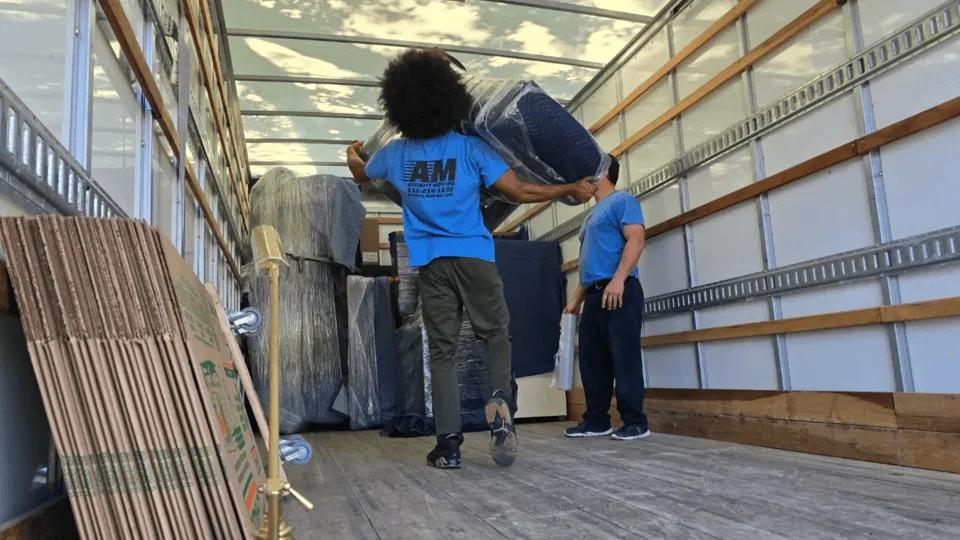
Once you have agreed on the plan, the crew gets to work. A well-run loading phase usually looks like this:
- Protect the home. Floor runners, door-jamb guards and banister wraps go down first.
- Wrap and pad furniture. Pieces are covered in moving blankets or wrap, and some are disassembled, such as bed frames, tables and shelving.
- Load heavy items first. Large furniture and appliances go on the truck first, with boxes packed against them and lighter, fragile items near the top.
- Inventory. The crew tags and lists the household goods. FMCSA says customers should accompany the movers during the inventory and resolve questions about item condition.
Your part is simple. FMCSA says to be present to answer questions and give directions, and to remain until the movers finish. That does not mean hovering. Pick a spot, stay reachable, and keep your phone on.
One practical tip: do not pack the last things that matter to you. Keep your keys, wallet, laptop, medications and chargers in your own bag, never in a box on the truck.
When the truck is loaded, do one last sweep. Open every closet, cabinet, the garage, the attic and the basement. Check the crawl space if you have one. It is far easier to find a forgotten box before the truck leaves than after.
Transit and travel
For a local move, the drive is short, and the crew will usually head straight to your new address. FMCSA says you should give the driver directions to your new home. Share the exact address, any gate or building codes, parking notes, and a phone number where someone can be reached.
For a long-distance move, delivery happens on a later date than loading. That is normal, and it should be spelled out in your paperwork. Plan on bringing clothes, medications, and basics for the days in between. Our long-distance moving services page explains how those moves are planned.
At the new place, use the drive time to get ahead. Walk the new home, decide where the big furniture goes, unlock everything, and clear the doorway. Put floor protection down if you have it, and confirm the elevator reservation.
Unloading and sign-off
The crew will bring furniture in first, usually, and place it according to your direction. The boxes follow, and the crew places each one in the room it is labeled for. Labels make this phase fast: write the destination room on at least two sides of every box.
FMCSA’s guidance for delivery is to be present to answer questions and give directions, supervise unloading and unpacking, and note any damaged or missing items on the inventory before signing. Do exactly that:
- Check off each numbered item against the inventory as it comes off the truck.
- Look at furniture in good light as it comes in, comparing it against your photos.
- Make sure beds and tables are reassembled where you want them, and that legs and hardware are accounted for.
- Walk the whole house before the crew leaves, checking floors, walls and doorframes.
- Write any damage or missing items on the inventory before you sign, and keep a copy.
Once you sign, you are confirming that the work was done. That is why the order matters: inspect first, then sign.
After the truck leaves, our first 24 hours unpacking checklist gives you a sensible order for the evening, so you sleep in a made bed instead of a maze of boxes.
What makes moving day run long
The same factors that FreightWaves lists explain most overruns: long carries, elevator constraints, unfinished packing, inventory changes, access surprises, weather and road conditions. Here is how to head each one off:
| Cause of delay | What to do beforehand |
|---|---|
| Long carry from door to truck | Reserve parking near the entrance and tell your mover the distance when you request the estimate |
| Elevator rules in apartments and offices | Book the freight elevator and ask building management for the allowed hours and any insurance paperwork required |
| Unfinished packing | Finish the night before, or book packing help in advance |
| Extra items added on the day | Do a full inventory before the estimate and call with changes early |
| Stairs, tight turns, large furniture | Describe them when you request the quote, and measure the biggest pieces and the doorways they must pass through |
| Weather | Ask the crew lead what their plan is for rain, snow or ice, especially in a Minnesota winter |
| Parking restrictions | Check city rules for the street. In dense neighborhoods, ask about permits |
If your building has a high-rise or loft layout, our downtown Minneapolis movers page explains how those moves are handled, and the Uptown Minneapolis movers page does the same for apartments and condos.
For a deeper look at the mistakes that cost people money, read our guide to avoiding fees, delays and claims when preparing for movers.
Your job and the crew’s job
It helps to divide the day clearly.
The crew handles:
- Protecting floors and doorways
- Wrapping, padding and carrying furniture and boxes
- Loading and securing the truck
- Taking the household goods inventory
- Driving and delivering
- Placing furniture and boxes, and reassembling what they disassembled
You handle:
- Being present, or naming a trusted representative, at both ends
- Reading and signing the paperwork, but only after reading it
- Keeping valuables, documents and medications with you
- Answering questions and giving directions
- Checking every room before the truck leaves
- Noting damage or missing items on the inventory before you sign
Some of this also depends on the type of service you book. If you want to save on a local, hourly move, you can do some of the work yourself, such as taking furniture apart. If you want less to do, a service that includes packing and furniture assembly takes more off your plate.
Our perspective: the day should be boring
We think a good moving day is an uneventful one. When something dramatic happens, the cause is nearly always something that could have been settled earlier: a parking spot nobody reserved, an item the estimate never counted, a staircase nobody mentioned.
That is why we put so much into the written estimate. It should account for size, access, distance and timing, so that the crew who shows up knows the plan and so do you. We would rather spend twenty minutes on the details a week before than watch a move unravel at the door. Our trained, licensed and insured crews are there to carry the work, but you know your belongings best, so the walkthrough is a conversation, not a formality.
The second thing we hold to is that you should never feel rushed at sign-off. Read the document, check the inventory against what came off the truck, and speak up about anything that looks wrong. A careful crew welcomes that. If a crew does not, that tells you something.
— Derrick
Plan your move with a written estimate
If you are moving in Minneapolis or the Twin Cities, we can put your moving day plan in writing before the day arrives. Our local moving services cover homes, apartments and condos, and our residential moving services can include packing, furniture disassembly and reassembly, and specialty items. Tell us about your stairs, parking and timing, and request a free estimate so you know what your day looks like.
FAQ
How long does moving day usually take?
It depends on the size of the home, stairs, parking distance, elevator rules and how much is already packed. Local moves often finish the same day, while long-distance moves have a later delivery date. Your written estimate and crew lead can give you a more accurate window for your own move.
What time will the movers arrive?
Movers typically give an arrival window instead of an exact time, because earlier jobs and traffic can shift the schedule. Confirm the window and the crew lead’s phone number the day before. If the building needs an elevator reservation, make sure your window fits it.
Do I need to be home during the move?
Yes, or someone you trust must be. FMCSA advises you to stay to answer questions and give directions, and to remain until the movers finish. You also need to be present at delivery to supervise unloading and note any damage on the inventory before signing.
What should I do if something is damaged or missing?
Write it on the inventory at delivery, before you sign any documents. Take photos and keep your copy of the paperwork. Then contact your mover promptly with the details, and refer to your photos from before the move.
Should I tip the movers?
Tipping is a personal choice, not a requirement. If you plan to tip, decide in advance and ask your mover how it prefers to handle it, so you have cash or a plan ready on the day.
Sources
- Moving Checklist, FMCSA
- Moving Day Expectations, FreightWaves
- Consumer alert on moving scams, New York Department of State