.png&w=384&q=75)
George Bamsey · June 10, 2026
? All articlesCommercial moves in Minneapolis and St. Paul fail on coordination more than on truck size. Offices, clinics, and warehouses share tight dock windows, IT cutover times, and building rules that residential crews rarely face. If you are planning a business relocation, start with inventory, access, and downtime budget, then compare commercial movers in Minneapolis who document multi-stop routes, pad wrap, and after-hours labor in writing before load day.
What counts as a commercial move in the metro
Commercial jobs include:
- Office suites and coworking floors
- Medical and dental practices with equipment sensitivity
- Retail back-of-house and showroom resets
- Warehouse partial moves and rack relocations
- Hybrid projects (office plus storage or records archive)
Each type needs a different crew mix, protection plan, and building paperwork. A quote built for cubicles does not fit a lab bench move without a rewrite.
Timeline: work backward from go-live
Before you call vendors, fix dates that cannot slip:
- Last day at the current address
- IT and phone cutover window
- First day staff must be operational at the new site
- Dock or elevator reservations at both buildings
- Certificate of insurance lead time from property managers
If those dates overlap by zero hours, you need after-hours labor, staged delivery, or storage-in-transit scoped upfront. Hope is not a logistics plan.
Building and dock access in Minneapolis and St. Paul
Metro commercial buildings often require:
- Freight elevator or dock appointments with sign-in desks
- COI with specific liability language and additional insured endorsements
- Hall and floor protection in common areas
- Parking or loading zone permits on one-way grids
- Snow-season matting and hall protection in winter
Photograph load paths at both addresses and send PDF building rules during quoting so labor hours reflect reality.
IT, desks, and specialty equipment
Coordinate with IT before furniture moves:
- Server and network gear often travels separately with labeled cabling maps
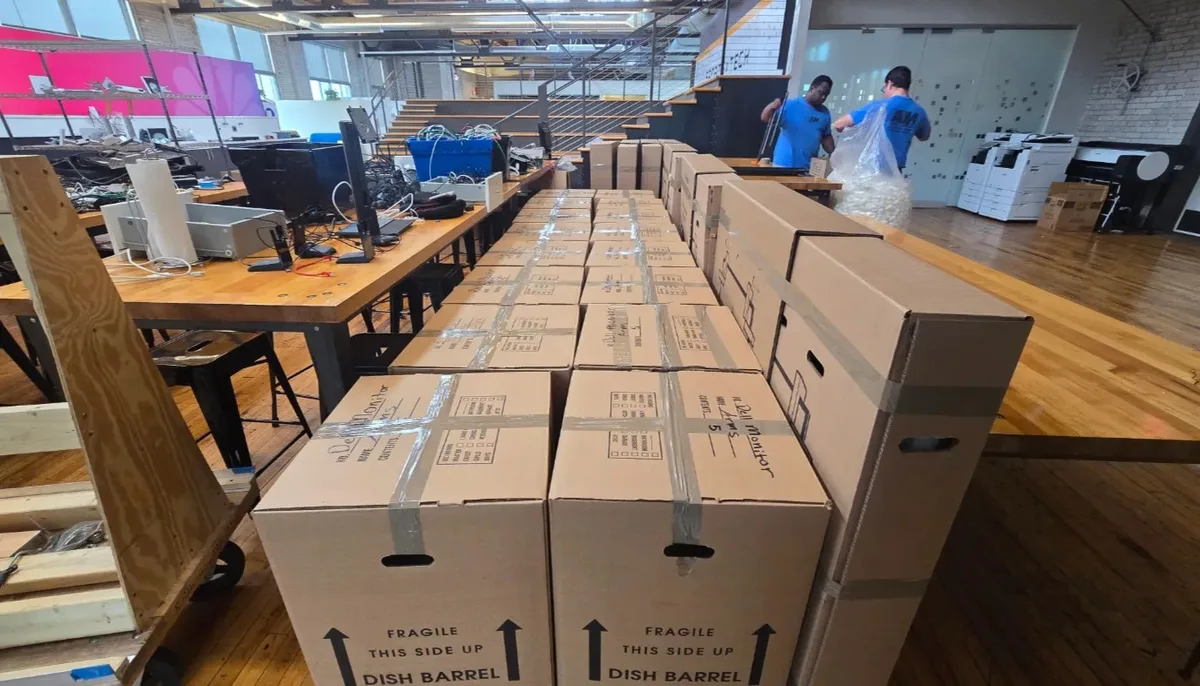
- Workstations may need monitor arms, sit-stand bases, or panel systems disassembled
- Medical and lab equipment may require vendor specialists alongside movers
Tell coordinators which items are mover-handled vs vendor-handled so the scope does not double-book or leave gaps.
Office relocation vs general commercial labor
Office relocation planning covers cubicle breakdown, labeled workstation maps, and after-hours load schedules tuned to lease hours. General commercial crews may focus on warehouse, retail fixture, or mixed inventory routes.
Match the service line to your move type during the first call, not after a generic hourly quote arrives.
How to compare commercial quotes fairly
Send the same inventory list, photos, and dates to every bidder. Compare scoped totals for:
1. Crew size and supervisor on site 2. Included pad wrap, floor protection, and labeling 3. After-hours or weekend minimum hours 4. Travel and multi-stop charges 5. Waiting time if docks or elevators run late 6. Disposal or donation stops if scoped
Reject bids that skip building paperwork or refuse written access notes.
When to request a written commercial estimate
After inventory and building docs are assembled, request a free commercial moving estimate with floor plans, dock rules, and specialty item lists attached. Affinity coordinators use that intake to align crew count, truck length, and schedule with the access plan, not a generic office template.
Red flags on commercial bids
Watch for:
- Cash-only demands or huge deposits before written scope
- Unmarked trucks on booking day
- Operators who cannot show Minnesota authority and insurance
- Quotes far below every other scoped bid without explaining missing labor
- Vague "one truck should handle it" answers without inventory review
Verify authority before you pay.
Frequently asked questions
How far ahead should we book a commercial move? As soon as lease and IT dates are firm; peak season and month-end weekends fill early.
Can one vendor handle office and warehouse legs? Often yes when every stop is listed in writing before move day.
Do commercial moves run after hours? Many Twin Cities office moves load overnight or weekends to avoid business downtime; confirm minimum hours in the quote.
What belongs in a commercial scope document? Crew count, protection materials, dock times, overtime rules, multi-stop list, and COI confirmation.
Should we pack ourselves? Self-pack saves labor but not always total time; confirm liability for customer-packed IT or files.
What if our closing date slips? Confirm reschedule and storage fees before signing.
Are virtual photos enough for commercial scope? Often for initial quotes; large or specialty installs may need on-site review.
Where should we start? Lock go-live dates, collect building rules, then vet carriers with the comparison script above.
Bottom line
Commercial move planning in the Twin Cities goes smoother when downtime, IT, and building access are scoped before the truck is booked. Document inventory at both addresses, compare written bids line by line, and hire licensed operators who put dock rules and crew hours in the estimate you sign.